














Introduction
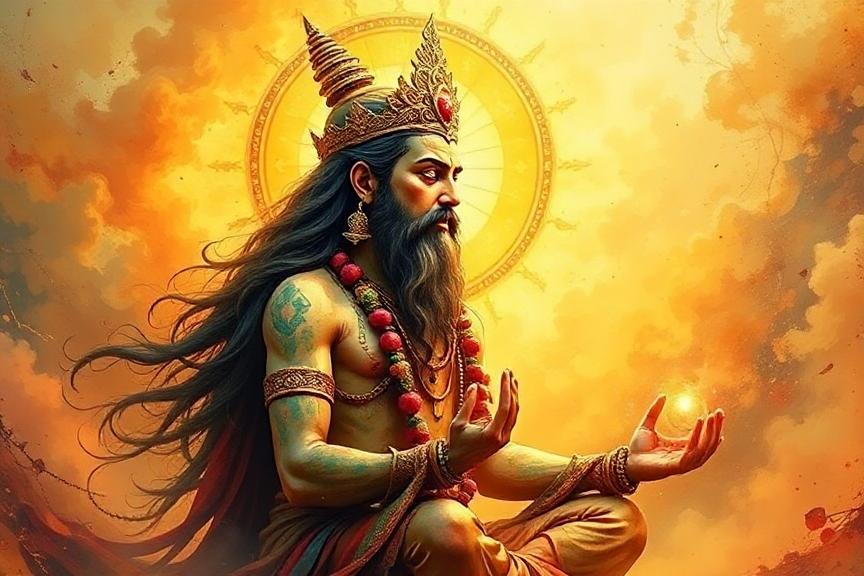
The story of Brahma and Kaal Bhairav is one of the most intriguing tales in Hindu mythology, showcasing the supremacy of Lord Shiva and the birth of his fierce form, Kaal Bhairav. This divine narrative highlights themes of ego, punishment, and divine justice, making it a compelling read for devotees and spiritual seekers.
In this blog, we explore the legend of Brahma and Kaal Bhairav, its significance, and the lessons it imparts. Whether you’re a mythology enthusiast or a devotee of Lord Shiva, this story will captivate your mind and soul.
The Story of Brahma and Kaal Bhairav
The Arrogance of Lord Brahma
According to ancient Hindu scriptures, Lord Brahma, the creator of the universe, once grew excessively proud of his powers. He believed that since he was the creator, no other deity was equal to him—not even Lord Vishnu (the preserver) or Lord Shiva (the destroyer).
This arrogance led Brahma to claim superiority over all gods, including Shiva. His fifth head (as Brahma originally had five heads) constantly boasted about his supremacy, disturbing the cosmic balance.
Lord Shiva’s Wrath and the Birth of Kaal Bhairav
Annoyed by Brahma’s pride, Lord Shiva decided to teach him a lesson. From his furious energy, Shiva manifested a terrifying form—Kaal Bhairav, the God of Time and Destruction.
Kaal Bhairav, with his dark complexion, fiery eyes, and a garland of skulls, emerged as the enforcer of cosmic justice. He carried a khatvanga (a skull-topped staff) and a bowl made from a skull (kapala), symbolizing punishment for ego and ignorance.
The Punishment of Brahma
Upon his creation, Kaal Bhairav confronted Brahma and, in a fit of divine rage, severed Brahma’s fifth head—the source of his arrogance. This act humbled Brahma, reminding him that even the creator is subject to the laws of the universe.
However, Brahma’s decapitation created a grave sin (Brahmahatya paap), as killing a Brahmin (even a divine one) was considered a severe crime. The skull of Brahma stuck to Kaal Bhairav’s hand, refusing to let go.
Kaal Bhairav’s Redemption and Eternal Guardian Role
To atone for his sin, Kaal Bhairav wandered as a penitent until he reached Varanasi (Kashi), the holy city of Lord Shiva. There, the skull finally fell off, freeing him from the curse.
Lord Shiva declared Kaal Bhairav as the Kotwal (chief guardian) of Kashi, ensuring that only those who seek true liberation (moksha) can enter the sacred city. Even Yama, the God of Death, has no authority in Kashi—Kaal Bhairav alone decides the fate of souls here.
Significance of the Brahma and Kaal Bhairav Story
- Destruction of Ego: The tale emphasizes the dangers of pride and the importance of humility.
- Divine Justice: Kaal Bhairav represents cosmic law—no one, not even Brahma, is above dharma.
- Protector of Kashi: Devotees believe that worshipping Kaal Bhairav ensures protection from evil and spiritual liberation.
- Symbol of Time (Kaal): As the God of Time, Kaal Bhairav reminds us of life’s impermanence.
Worship of Kaal Bhairav Today
- Kaal Bhairav Temples: The most famous shrine is the Kaal Bhairav Temple in Varanasi, where devotees offer liquor (as a symbolic gesture) to seek his blessings.
- Fasting and Rituals: Many observe fasts on Tuesdays and Sundays, reciting the Kaal Bhairav Ashtakam for protection.
- Tantric Practices: In some traditions, Kaal Bhairav is worshipped for overcoming enemies and obstacles.
Conclusion: The Eternal Lesson of Kaal Bhairav
The legend of Brahma and Kaal Bhairav teaches us that no one is beyond the laws of the universe. Ego leads to downfall, while surrender to divine will brings liberation.
For those seeking protection, justice, and spiritual growth, worshipping Kaal Bhairav can be a powerful practice. His fierce yet benevolent form continues to inspire millions, reinforcing the timeless truth—Dharma always prevails.







What do you think?
Show comments / Leave a comment